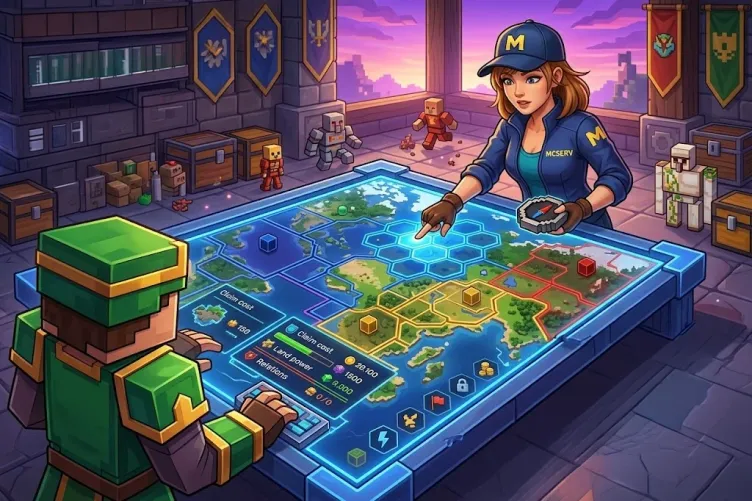
Minecraft Factions, many have heard of them. Few truly understand the depth of the mode before diving in. The result: dozens of hours invested on a server, a base raided in one night, and the frustration of not knowing how to protect oneself.
👉 This guide covers all the important mechanics of Factions exhaustively: from the claim system to TNT cannons, through the economy of spawners and end-of-season strategies.
➡️ Find the best Factions servers on McServ.org.
The claim system: understanding everything
How claiming works
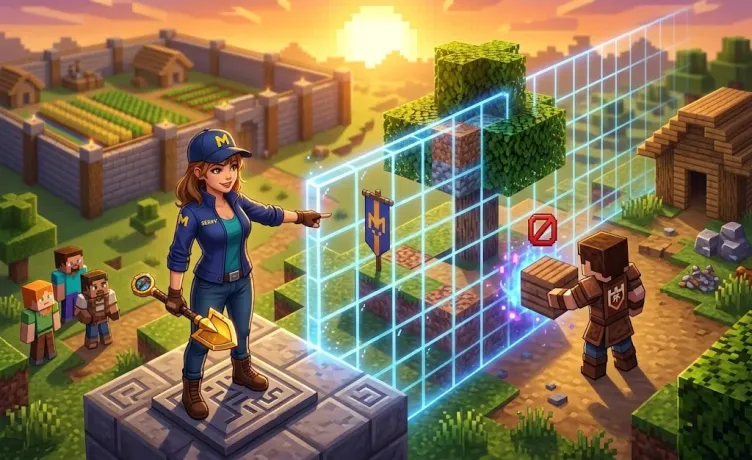
Claiming a chunk means that your faction officially owns this area of 16x16 blocks. In a claimed chunk:
- Players outside the faction cannot break blocks normally
- Members of your faction can build, break, and interact freely
- Members of allied factions have configurable permissions
The basic command is /f claim to claim the chunk you are in. Chunks are claimed one by one, and each claimed chunk costs power to your faction.
Overclaiming: attacking without a cannon
Overclaiming occurs when a faction's power drops below the number of chunks it has claimed. In this case, an enemy faction can use /f claim to directly take those chunks without having to break through the walls with a cannon.
👉 This is why killing enemy members is a direct strategy: each death reduces their power and brings their claims closer to overclaiming.
Special zones
- Wilderness: unclaimed land, accessible to all, PvP and destruction allowed
- Warzone: area around the spawn generally in free PvP but not claimable
- SafeZone: protected area (spawn) where PvP and damage are disabled
The economic system in detail
Spawners: the backbone
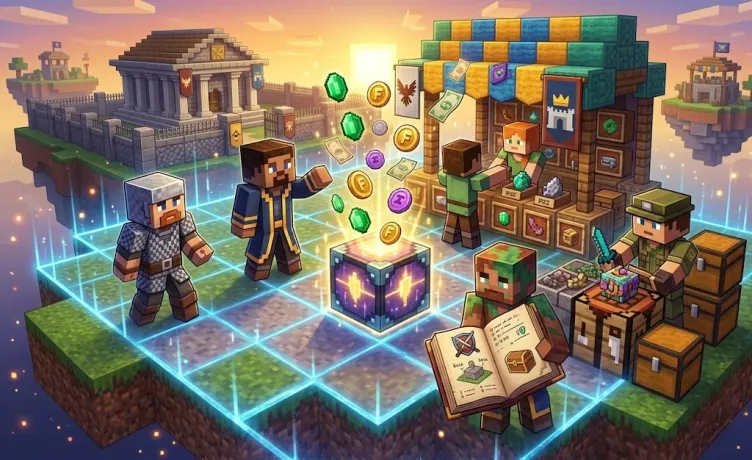
Spawners are the most valuable mob generators on modern Factions servers. They continuously generate mobs that drop sellable items. Cow, pig, or zombie spawners generate passive income even when you are not logged in.
Types of spawners by approximate value (varies by server):
- Cow Spawner: stable income in leather and meat, accessible at the start of the season
- Blaze Spawner: blaze rods for potions and mid-game economy
- Iron Golem Spawner: massive iron production, very profitable
- Wither Skeleton Spawner: Wither heads and bones, highly sought after
The first priority of any serious faction is to accumulate as many spawners as possible and protect them in the most secure room of the base.
Automatic farms
Even without premium spawners, vanilla resource automatic farms generate consistent income:
- Sugar Cane: the most common and profitable farm at the start of the season
- Cactus: easy to build, good yield
- Wheat, carrots, potatoes: for food and selling
- Automatic wood: abundant building resource
The AH (Auction House)
Most modern Factions servers offer an Auction House, a centralized market where players can buy and sell items among themselves. Mastering the AH is a skill in itself:
- Buy low at the start of the season when resources are abundant
- Sell high in mid-game when players need specific items
- Identify shortages and fill them before competitors
Custom enchantments: OG vs Modern Factions
OG Factions
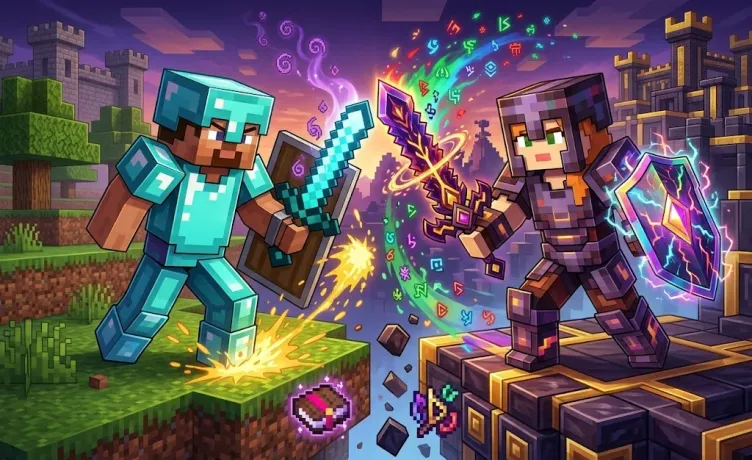
In classic Factions (OG), the enchantments are those of the base vanilla game. The optimal gear is generally:
- Diamond armor with Protection IV, Thorns III
- Diamond sword with Sharpness V, Knockback II
- Bow with Power V, Flame, Infinity
- Strength II, Speed II, and Regeneration potions
Modern Factions
Modern Factions servers add hundreds of custom enchantments that completely transform the combat meta. Common examples:
- Armor enchantments: Vampirism (life steal), Tenacity (additional damage reduction), Bounce (reflects some damage)
- Weapon enchantments: Execution (damage bonus on low-health targets), Stun chance, Bleeding (damage over time)
- Tool enchantments: Excavation (mine multiple blocks simultaneously), Speed Mining
👉 On Modern Factions servers, understanding the meta of custom enchantments is as important as mastering vanilla mechanics.
TNT cannons: technical guide
Why are cannons necessary?
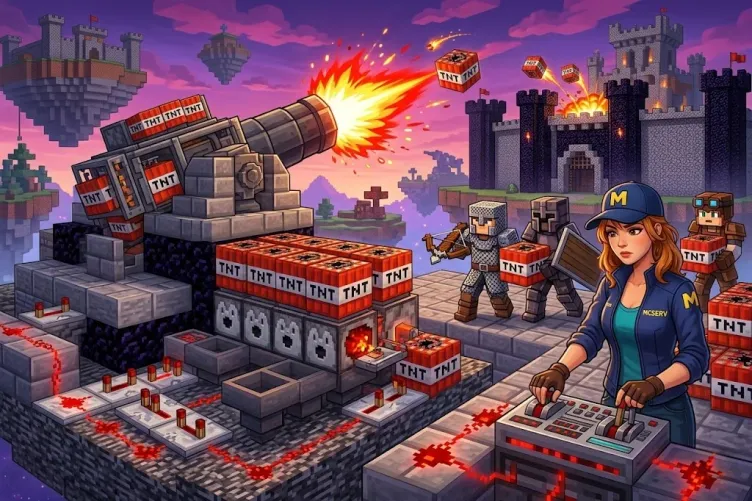
Blocks in enemy claims cannot be broken manually. The only way to breach the defenses of a claimed base is to launch TNT blocks that explode inside enemy walls. A well-designed TNT cannon can break through several blocks of obsidian per shot.
The components of a basic cannon
- Propulsion chamber: row of TNT arranged to create propulsion force
- Projectile: the TNT that will be propelled towards the target
- Redstone triggering system: circuit that activates the TNT in the correct order
- Aiming system: mechanism to adjust the trajectory
The rules of cannon speed
Most competitive servers limit cannon speed to prevent instant raids. This limit defines how many TNT can explode per second. Checking the server's cannon speed limit before building your cannon is essential.
The anti-patching rules
Many servers have rules against "mid-raid patching", meaning repairing walls during an active raid. Check the server rules to see what is allowed.
End of season strategies
KOTH (King of the Hill)
Many Factions servers host regular KOTH events: a central area that factions compete for. The faction that holds the area the longest wins rewards. KOTH is a great way to earn premium resources and reputation on the server.
The outpost
Some servers offer Outposts, special areas that factions can capture for permanent bonuses (additional income, faction buffs, access to exclusive shops). Holding an Outpost is a major strategic objective.
The race for the leaderboard
At the end of each season, the leaderboards are frozen. The leading faction receives significant rewards (premium currency, ranks, exclusive items for the next season). The race for the leaderboard intensifies in the final days of the season, with massive raids to steal spawners from top factions.
👉 End of season strategy for new factions: instead of aiming for first place (unrealistic without weeks of investment), target mid-ranking factions that have accumulated resources but are less well defended than top factions.
Factions trends in 2026
- The meta in 2026 is divided between OG Factions (classic Factions with PvP 1.8) and Modern Factions (with custom gear and advanced TNT mechanics). Minecraft
- Short seasons (2 to 4 weeks) dominate the market as they create a natural narrative tension with a clear beginning and end.
- In-game events (KOTH, Envoys, Boss events) have become standard features on all major Factions servers.
- Crossplay Java + Bedrock is growing on Factions servers, expanding the available communities.
- Earth Factions servers with real geopolitical maps are gaining popularity as an alternative to traditional Factions.
FAQ
What is a raid in Minecraft Factions?
A raid involves using TNT cannons to breach the defenses of an enemy base and steal their spawners, treasure, and resources. It is the central mechanic and ultimate goal of any war in Factions.
How to protect your base in Factions?
Key elements: thick obsidian walls for critical areas, alternating layers of materials, a buffer of claimed land around the main base, and a treasure room deeply buried. Your faction's power must always remain above the number of claimed chunks.
What is power in Minecraft Factions?
Power is an individual gauge for each player that contributes to the faction's total pool. It determines how much land your faction can claim. Dying reduces your power. If the total power drops below the number of claims, they become vulnerable to enemy overclaiming.
OG Factions or Modern Factions: which to choose?
If you want Factions close to the original experience with classic PvP 1.8, choose an OG server. If you want custom enchantments, boss events, and enriched mechanics, choose Modern Factions. Both have their active communities in 2026.
How to win a Factions season?
The faction that dominates a season generally combines: a fast start to secure the best spawners, impeccable defense, successful raids on competitors, and effective diplomacy to isolate enemies. Team consistency and coordination are worth more than individual skills.
➡️ Discover all available Factions servers, filtered by style, version, and season length, on McServ.org.